Thermocouples are widely used in various industrial applications for temperature measurement. Among the different types of thermocouples, type K thermocouples are one of the most commonly used. In this article, we will discuss how type K thermocouples are made, their properties, and their usage in the non-ferrous industry.
Type K thermocouples are made by combining two different metals, chromel, and alumel. Chromel is an alloy of nickel and chromium, while alumel is an alloy of nickel, aluminum, and manganese. These metals are chosen because of their high melting points, good oxidation resistance, and excellent stability at high temperatures.
The process of making a type K thermocouple involves twisting or welding the two wires of chromel and alumel together to form a junction. This junction is then enclosed in a protective sheath made of stainless steel, which helps to protect the wires from corrosion, mechanical damage, and external temperature fluctuations.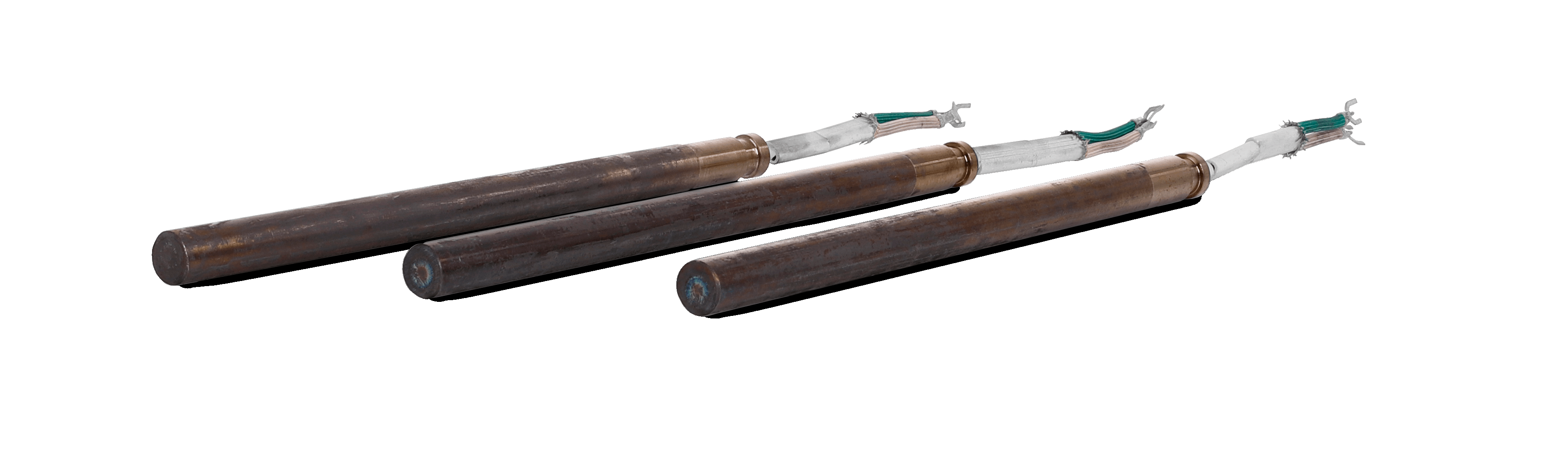
Type K thermocouples have several properties that make them suitable for various industrial applications. These properties include high accuracy, a wide temperature range (up to 1,372°C), and good sensitivity. They also have good stability, meaning that they do not drift or change their readings over time, making them ideal for long-term use.
In the non-ferrous industry, type K thermocouples are widely used for temperature measurement in various processes. One of the main applications of type K thermocouples in the non-ferrous industry is in the melting and refining of metals such as copper, aluminum, and zinc.
During the melting process, type K thermocouples are used to measure the temperature of the molten metal, ensuring that the temperature is maintained within the desired range. This helps to prevent overheating or underheating of the metal, which can result in quality issues or process inefficiencies.
Type K thermocouples are also used in the casting and extrusion of non-ferrous metals. They are used to measure the temperature of the metal during the casting process to ensure that it is within the required range. This helps to prevent defects such as porosity or cracks in the finished product.
Consider LH Marshall thermocouples if you're looking for customized thermocouples with great quality and performance. As the European distributor of LH Marshall thermocouples, SRS Amsterdam offers a wide range of options tailored to meet your specific needs. Whether you require precise temperature measurements in demanding industrial environments or customized solutions for unique applications, LH Marshall thermocouples deliver reliability and accuracy. To explore the full capabilities of LH Marshall thermocouples and learn more about our offerings, visit our website at. Experience the difference with LH Marshall thermocouples, the trusted choice for precise temperature sensing in critical processes.